How the CPA’s ALF-A programme empowers pharmacists in the fight against AMR
The Commonwealth Pharmacists Association (CPA) is committed to empowering pharmacists, especially those in LMICs, to lead the fight against AMR. Pharmacists are often the most accessible healthcare professionals in these countries, so are particularly well-placed to improve antimicrobial stewardship (AMS) in their communities.
Antimicrobial resistance (AMR) is one of the most pressing global public health threats of our time. Misuse of antimicrobials has led to the development of drug-resistant pathogens that threaten to undo a century of progress in modern medicine and, as the drivers and consequences of AMR are exacerbated by poverty, the effects of this crisis are felt most severely in low- and middle-income countries (LMICs).
As part of our Commonwealth Partnerships for Antimicrobial Stewardship programme (CwPAMS; in collaboration with Global Health Partnerships), CPA has created the Africa Leadership Fellowship-AMS (ALF-A). This scheme seeks to provide leadership training and mentorship programmes to empower pharmacists to be local leaders in promoting and delivering AMS projects, with a view to ultimately create a cadre of pharmacist AMS/AMR specialists across Africa.
The appropriateness of pharmacists to lead AMS efforts has been proven in many countries, particularly in the Global North, as they are able to lean on their expertise in medications to advise prescribers (or other healthcare workers), patients and carers about correct use of antimicrobials as well as – amongst other contributions – reviewing the propriety of antimicrobial prescriptions and monitoring their usage among their patients.
As LMICs bear the greatest burden in terms of AMR, it is vital that this policy is implemented in these countries too where, as discussed, pharmacists are the most accessible medical professionals in many communities.
ALF-A, in equipping pharmacists not only with AMR/AMS technical knowledge but also with leadership and behaviour change skills, seeks to support the implementation of interventions that target key behaviours contributing to AMR. The programme’s ultimate goal is to reinforce sustainable change in AMS practices in its target countries, turning back the tide against the growing prevalence of AMR and, in turn, against the mortality rate it causes.
ALF-A represents an innovative and transformative opportunity to upskill pharmacists in healthcare leadership and foster collaboration in delivering AMS initiatives. By empowering ALF-A fellows with practical knowledge of leadership, project management, behaviour science, quality improvement, and a global perspective on AMR, it strengthens the foundation for sustainable AMS practices and a collective response to AMR challenges in LMICs and beyond.
Pharmacists, as medicines experts, are uniquely positioned to lead multidisciplinary teams and spearhead innovative quality improvement AMS initiatives.
Chiko Savieli
Workforce Capability Building Programme Lead
So far the programme has supported the delivery of:
44
pharmacist-led AMS improvement projects, administered within multidisciplinary teams
8
in-country Communities of Practice and shared learning events attended by fellows, mentors and key AMR stakeholders
5
abstracts presented at 4 conferences, including the FIP World Congress of Pharmacy and Pharmaceutical Sciences – the world’s largest gathering of pharmacy leaders.
Testimonials
Further to the achievements listed above, we are delighted that many of our ALF-A fellows also have personally described their experiences with the programme as being beneficial to their careers. Their full testimonials can be listened to below.
Yinka Adeyemi, Deputy Director and Paediatric Pharmacist at University College Hospital, Ibadan, Nigeria, reported that the ALF-A programme improved her communication, presentation and leadership skills, which both improved her confidence and developed trust and empathy among team members. Overall, the programme helped her to understand the importance of her role as a pharmacist.
Hope Kalasa, a pharmacist in Zambia, described how ALF-A exposed him to new methods of leadership, having previously believed that leadership was a birthright rather than something that could be taught. He now uses evidence-based studies in considering how to manage situations, which has improved output in his department and, he believes, allows him to deal with bigger issues in a better way.
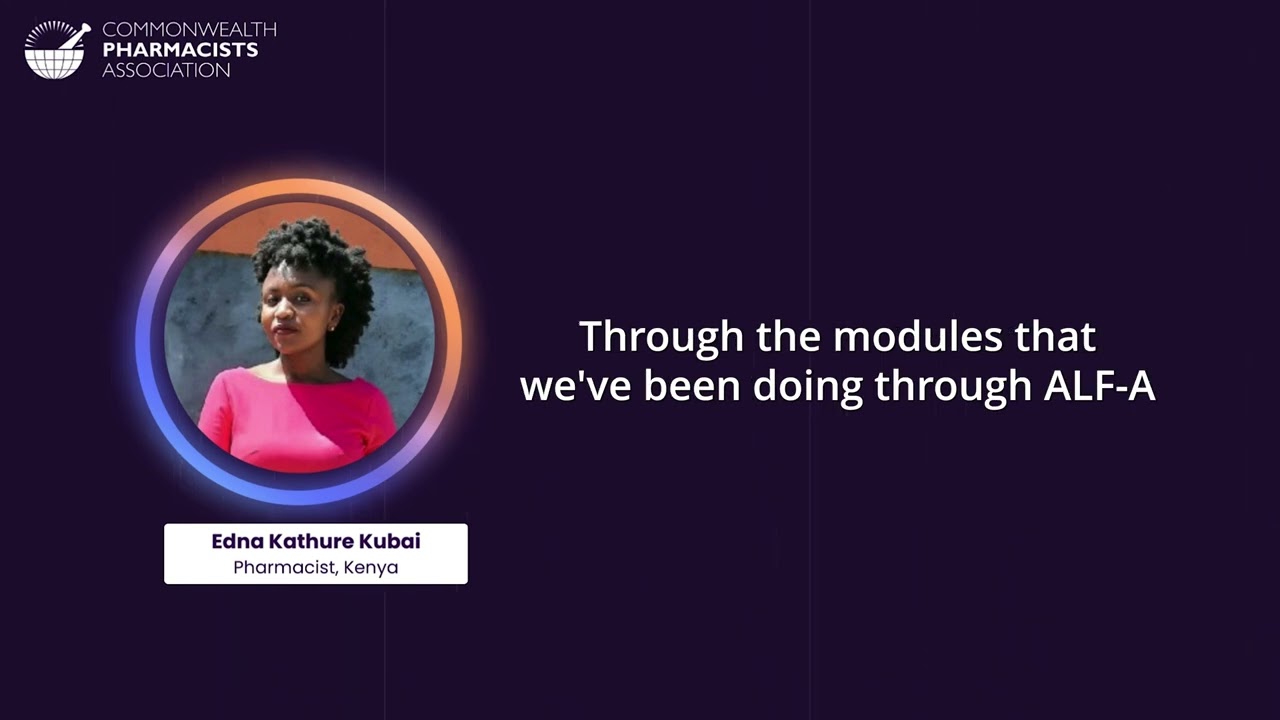
Edna Kathure Kubai, a pharmacist and also the AMR Focal Point for Laikipia County, Kenya, detailed that she, through the Johari window and SWOT analysis, has become more self-aware of her strengths and weaknesses which has improved her confidence and, in continuum, her leadership ability. She attributes her mentor with having turned her life around, and is now a mentor herself.
Hanna Kumwenda, a clinical pharmacist in Malawi, outlined how ALF-A made her aware of alternative methods of practice and mentoring. She learned delegation skills, particularly the importance of empowering and trusting team members, and developed her own confidence in feeding back her insight and learnings to her supervisors.
Annabella Bensusan Osafo, AMS Training Coordinator and Pharmacist at University Hospital, Kumasi, Ghana, relayed that, as Training Coordinator, she developed her leadership and interpersonal skills and, like Hanna, learned delegation skills, which have significantly contributed to reducing her stress levels and improving her work-life balance. Furthermore, she found the webinars particularly useful in encouraging collaboration across ALF-A countries.
Noah Sesay, a pharmacist in Sierra Leone, recorded that the programme was especially useful to him in developing his technical abilities in conflict management and equipping him with the skills to engage with and influence stakeholders. Summarising, he proclaimed that ALF-A helps pharmacists become “complete”.
Pharmacists are at the forefront of the global fight against AMR, and the ALF-A programme is only one way in which the CPA seeks to empower pharmacists in the Commonwealth in tackling this crisis.
If you’re passionate about this goal, please consider supporting our work as a Patron. The support of our Patrons helps us to invest in transformative healthcare initiatives, promote patient-centered care, and champion collaboration across the Commonwealth, enabling us to make a tangible global impact.
About CwPAMS and the Fleming Fund
Commonwealth Partnerships for Antimicrobial Stewardship (CwPAMS) is an initiative to tackle AMR and promote AMS. They are backed by funding from The Department of Health and Social Care’s Fleming Fund, a UK aid programme supporting up to 25 countries across Africa and Asia to tackle antimicrobial resistance (AMR). The Fleming Fund invests in strengthening data surveillance systems through a portfolio of country grants, regional grants and fellowships managed by Mott MacDonald, and global projects managed by partners.